

- Excursions in Egypt
- Egypt Tour Packages
- Cairo Tours and Excursions
- Hurghada Tours and Excursions
- Soma Bay Tours and Excursions
- Makadi Bay Tours and Excursions
- Sahl Hasheesh Tours and Excursions
- El Gouna Tours and Excursions
- Marsa Alam Tours and Excursions
- Port Ghalib Tours and Excursions
- El Quseir Tours and Excursions
- Dendera and Abydos Day Tours
- Aswan Tours and Excursions
- Luxor Tours and Excursions
- Sharm El Sheikh Tours and Excursions
- Top Rated Egypt Tours in 2026
- Optional Excursions in Egypt
- Private Transfer
- Blogs About egypt
- Ancient Egypt
- Historical Sites in Egypt
- Cairo
- Alexandria
- Luxor
- Aswan
- The Red Sea
- Dendera Temple
- El Fayoum Oasis
- Bahariya Oasis
- Siwa Oasis
- Al Alamein
- Marsa Matruh
- Why Egypt Is One of the Safest Countries to Visit in the Middle East
- What You Need To know Before Your First Trip To Egypt
- Egypt Travel Costs in 2026 Full Budget Guide
- Top 10 Tourist Activities in Egypt
- Top 50 Activities You Can’t Miss in Egypt in 2026
- The Guide to Guided Tours in Egypt
- Egypt’s Ancient and Modern History
- The Nile River
- The Deserts of Egypt
- Ancient Egyptian gods
- famous Egyptian dishes
- UNESCO World Heritage sites
- About Us
- Egypt Hotels and Resorts
- Excursions in Egypt
- Egypt Tour Packages
- Cairo Tours and Excursions
- Hurghada Tours and Excursions
- Soma Bay Tours and Excursions
- Makadi Bay Tours and Excursions
- Sahl Hasheesh Tours and Excursions
- El Gouna Tours and Excursions
- Marsa Alam Tours and Excursions
- Port Ghalib Tours and Excursions
- El Quseir Tours and Excursions
- Dendera and Abydos Day Tours
- Aswan Tours and Excursions
- Luxor Tours and Excursions
- Sharm El Sheikh Tours and Excursions
- Top Rated Egypt Tours in 2026
- Optional Excursions in Egypt
- Private Transfer
- Blogs About egypt
- Ancient Egypt
- Historical Sites in Egypt
- Cairo
- Alexandria
- Luxor
- Aswan
- The Red Sea
- Dendera Temple
- El Fayoum Oasis
- Bahariya Oasis
- Siwa Oasis
- Al Alamein
- Marsa Matruh
- Why Egypt Is One of the Safest Countries to Visit in the Middle East
- What You Need To know Before Your First Trip To Egypt
- Egypt Travel Costs in 2026 Full Budget Guide
- Top 10 Tourist Activities in Egypt
- Top 50 Activities You Can’t Miss in Egypt in 2026
- The Guide to Guided Tours in Egypt
- Egypt’s Ancient and Modern History
- The Nile River
- The Deserts of Egypt
- Ancient Egyptian gods
- famous Egyptian dishes
- UNESCO World Heritage sites
- About Us
- Egypt Hotels and Resorts
Welcome to
Recent Archaeological Discoveries in Egypt: New Secrets from the Land of the Pharaohs
Egypt continues to captivate the world with remarkable archaeological discoveries that reveal new chapters of its ancient history. As one of the richest archaeological destinations on Earth, Egypt constantly provides historians, archaeologists, and travelers with extraordinary insights into the lives of pharaohs, priests, nobles, and ordinary citizens who lived thousands of years ago. Recent archaeological discoveries in Egypt have uncovered hidden tombs, lost cities, royal treasures, golden mummies, and previously unknown burial chambers, offering fresh perspectives on Ancient Egyptian civilization.
From the sands of Saqqara and the temples of Luxor to the remote deserts of Bahariya Oasis, excavation teams continue to make groundbreaking discoveries that reshape our understanding of Egypt’s past. These findings provide valuable information about ancient Egyptian religion, royal burial practices, architecture, art, politics, trade, and daily life. Many of these discoveries are exceptionally well-preserved, allowing researchers to study ancient artifacts in unprecedented detail.
Recent excavations have revealed new tombs from the Old Kingdom, treasures belonging to Pharaoh Amenhotep III, the famous Lost City of Aten, beautifully decorated burial chambers, and golden mummies dating to the Ptolemaic period. In addition, ongoing investigations into a possible hidden chamber connected to Queen Nefertiti have generated worldwide excitement among Egyptologists.
In this comprehensive guide, we explore the most important recent archaeological discoveries in Egypt, examining what they reveal about one of history’s greatest civilizations. These discoveries not only deepen our knowledge of Ancient Egypt but also demonstrate that many secrets of the pharaohs are still waiting to be uncovered beneath Egypt’s sands .
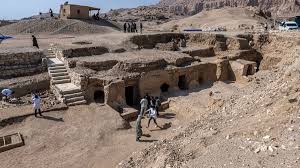
1. Why Egypt Continues to Produce Major Archaeological Discoveries
Few countries in the world rival Egypt when it comes to archaeological discoveries. For more than two centuries, archaeologists have explored the temples, tombs, pyramids, and ancient cities of Egypt, yet new discoveries continue to emerge every year. This constant stream of findings is one reason why Egypt remains one of the most exciting destinations for archaeological research and historical exploration. The geography of Egypt has played a major role in preserving ancient remains. The country's dry desert climate helps protect organic materials such as wood, textiles, papyrus, and even human remains. Unlike many ancient civilizations whose monuments were destroyed by weather and vegetation, Egypt's archaeological sites often remain remarkably intact after thousands of years. Modern technology has also transformed archaeological research. Advanced radar scanning, satellite imaging, ground-penetrating sensors, 3D mapping, and digital reconstruction techniques allow researchers to identify hidden structures without disturbing the surrounding environment. These technologies have led to the discovery of previously unknown tombs, buried settlements, and concealed chambers beneath famous monuments. Another factor is the sheer scale of Ancient Egyptian civilization. Stretching across thousands of years, Egypt built countless temples, cemeteries, administrative centers, and cities along the Nile Valley. Experts estimate that many significant archaeological sites remain undiscovered beneath modern settlements, agricultural fields, and desert sands. The growing collaboration between Egyptian and international archaeological missions has further accelerated discoveries. Excavation teams from around the world work alongside Egyptian specialists to uncover and preserve important historical sites. As a result, recent archaeological discoveries in Egypt continue to reveal extraordinary details about pharaohs, royal families, religious beliefs, daily life, and cultural traditions. Each new discovery brings historians closer to understanding the complexities of one of humanity's most remarkable civilizations.

2. Saqqara: Egypt's Endless Archaeological Treasure Chest
Among all archaeological sites in Egypt, Saqqara stands out as one of the most productive and historically significant. Located south of modern Cairo, Saqqara served as the primary necropolis of Memphis, the ancient capital of Egypt, for more than three thousand years. The site is best known for the Step Pyramid of Djoser, the world's oldest large-scale stone monument, but recent archaeological discoveries have demonstrated that Saqqara still holds countless secrets beneath its sands. The vast necropolis contains tombs, burial shafts, temples, pyramids, and ceremonial structures dating from multiple periods of Egyptian history. Because generations of Egyptians chose Saqqara as a burial ground, archaeologists continue to uncover new tombs and artifacts that span thousands of years. Recent excavations have revealed remarkably preserved coffins, statues, mummies, funerary masks, and painted burial chambers. Many of these discoveries have transformed our understanding of the Old Kingdom, New Kingdom, and Late Period. The preservation of colors, inscriptions, and artwork at Saqqara is often extraordinary, allowing researchers to study ancient Egyptian culture in remarkable detail. One of the reasons Saqqara remains so important is that many sections of the necropolis have never been fully excavated. Large areas remain buried beneath the desert, suggesting that future discoveries may be even more significant than those already uncovered. The site also provides valuable insights into Egyptian religious beliefs and burial customs. Hieroglyphic inscriptions, offering scenes, and funerary objects reveal how ancient Egyptians prepared for the afterlife and honored their deceased relatives. Today, Saqqara continues to produce some of the most important archaeological discoveries in Egypt. Each excavation season uncovers new evidence that expands our knowledge of Ancient Egyptian society, making the site one of the world's greatest archaeological treasures.
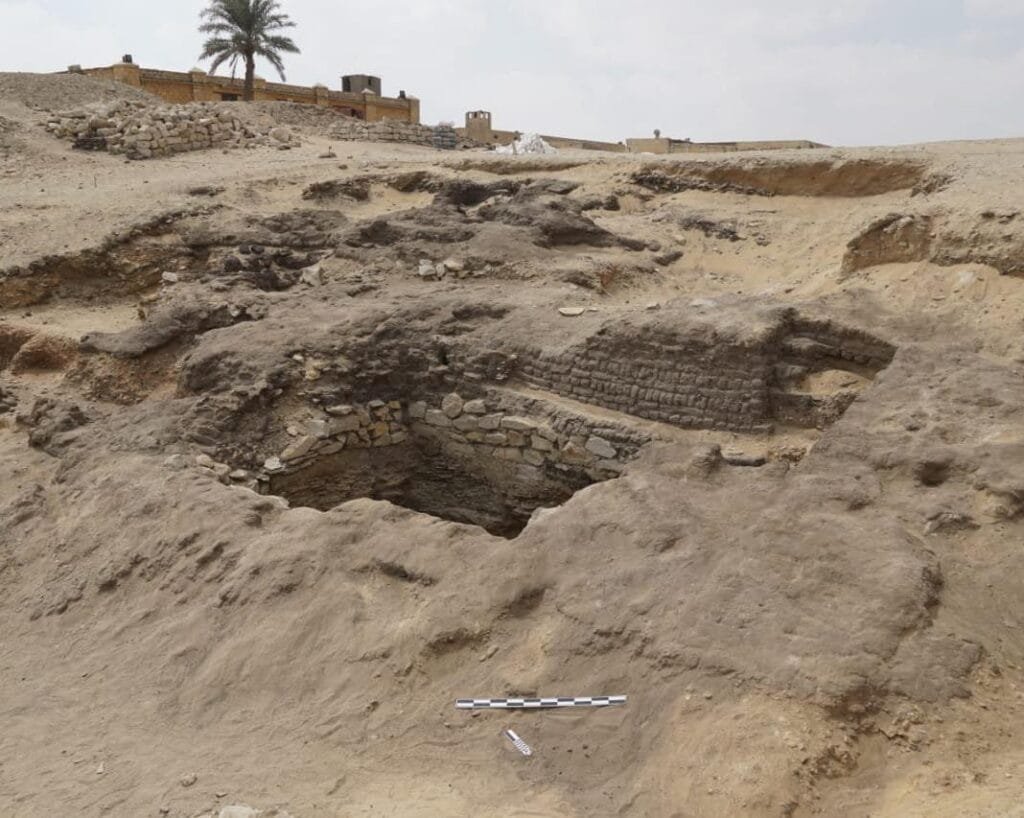
3. Discovery of New Tombs at Saqqara (2025)
One of the most exciting recent archaeological discoveries in Egypt occurred in 2025 at the famous Saqqara necropolis. Archaeologists working at this vast burial complex uncovered a series of previously unknown tombs dating back to the Fifth Dynasty of the Old Kingdom, approximately 4,300 years ago. The discovery immediately attracted international attention because of the exceptional preservation of the tombs and the wealth of artifacts found inside. Saqqara has long been recognized as one of the most important archaeological sites in Egypt, serving as the burial ground for nobles, priests, and royal officials connected to the ancient capital of Memphis. Despite decades of excavation, the site continues to produce remarkable discoveries that reveal new details about Ancient Egyptian civilization. The newly discovered tombs demonstrate that large portions of the necropolis still remain unexplored beneath the desert sands. Among the most significant finds were intact burial chambers containing decorated wooden coffins, colorful wall paintings, statues, and numerous funerary objects. Archaeologists were particularly impressed by the quality of the artwork, which remained vibrant despite the passage of thousands of years. Hieroglyphic inscriptions identified several high-ranking officials and provided valuable information about their titles, responsibilities, and social status within Old Kingdom society. The discovery also revealed evidence of elaborate burial rituals designed to prepare the deceased for the afterlife. Offerings, ceremonial objects, and religious texts found within the tombs illustrate the deep spiritual beliefs that guided Ancient Egyptian funerary practices. This discovery at Saqqara represents one of the most important archaeological breakthroughs of recent years. It not only enriches our understanding of the Old Kingdom but also highlights the continuing importance of Saqqara as one of Egypt’s most productive archaeological sites. The newly uncovered tombs provide historians with valuable information about religion, administration, art, and daily life during one of Ancient Egypt’s earliest golden ages.
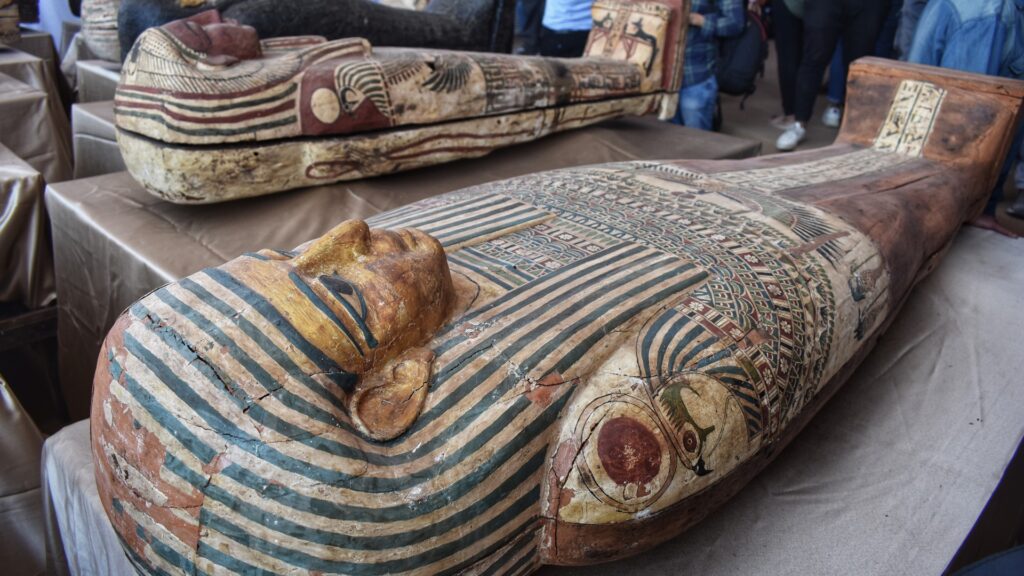
4. The Coffins and Hieroglyphic Inscriptions of Saqqara
Among the most fascinating elements of the 2025 Saqqara discoveries were the beautifully preserved wooden coffins and hieroglyphic inscriptions found inside the newly uncovered tombs. These artifacts provide an extraordinary glimpse into the religious beliefs, artistic traditions, and social structure of Ancient Egypt during the Old Kingdom period. The coffins were crafted from carefully selected wood and decorated with colorful scenes, sacred symbols, and religious texts intended to guide the deceased safely into the afterlife. Despite being buried for more than four millennia, many retained traces of their original pigments, allowing archaeologists to study the techniques used by ancient Egyptian artists and craftsmen. Hieroglyphic inscriptions covering the coffins and tomb walls identified the individuals buried within the chambers. These texts recorded names, official titles, family relationships, and accomplishments, offering historians valuable biographical information about members of Egypt's elite class. Some inscriptions described the deceased as priests, administrators, royal advisors, or supervisors of important state institutions. Religious scenes were particularly common throughout the tombs. Images of gods such as Osiris, Anubis, and Horus appeared alongside offering tables, sacred rituals, and symbolic journeys through the underworld. These depictions reveal the Egyptians' strong belief in life after death and their desire to secure divine protection for eternity. Several inscriptions also contained prayers and offering formulas that were intended to provide food, drink, and spiritual sustenance for the deceased. Such texts help scholars better understand the development of Ancient Egyptian funerary traditions and religious practices. The discovery of these coffins and inscriptions is significant because it provides direct evidence of how elite Egyptians prepared for the afterlife. Their remarkable preservation allows researchers to study language, art, religion, and social hierarchy in unprecedented detail, making them among the most valuable artifacts uncovered in recent archaeological discoveries in Egypt.
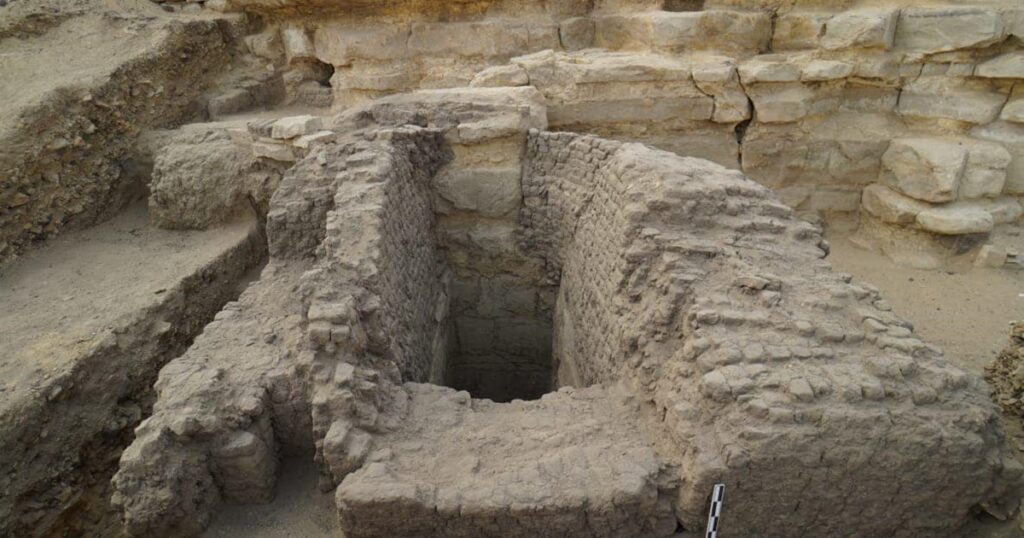
5. What the Saqqara Discoveries Reveal About Old Kingdom Society
Beyond the spectacular artifacts themselves, the recent discoveries at Saqqara offer valuable insights into the structure and daily functioning of Old Kingdom society. Often referred to as the "Age of the Pyramid Builders," the Old Kingdom was a period of political stability, economic growth, and monumental construction. The newly uncovered tombs provide historians with important information about the people who helped maintain this powerful civilization. The individuals buried within the Saqqara tombs were not pharaohs but high-ranking officials who played essential roles in government administration, religious institutions, and economic management. Their elaborate burial chambers demonstrate the wealth and influence enjoyed by Egypt's upper classes during this period. The tomb decorations reveal that social status was carefully recorded and celebrated even after death. Scenes painted on the walls depict various aspects of daily life, including farming, fishing, hunting, food preparation, craftsmanship, and religious ceremonies. These images offer historians a detailed visual record of the activities that supported Egypt’s economy and sustained its population. Unlike royal monuments that focus primarily on kings and gods, these tombs provide a more personal perspective on ancient society. The discoveries also highlight the importance of family relationships. Many tomb scenes show husbands, wives, children, and extended relatives participating in ceremonies and presenting offerings to the deceased. These depictions suggest that family bonds remained central to Egyptian culture and were expected to continue into the afterlife. Religious beliefs are another major theme revealed by the tombs. The extensive use of funerary texts, protective symbols, and depictions of deities reflects the widespread belief that successful preparation for the afterlife required careful planning and spiritual guidance. Together, these discoveries enrich our understanding of Old Kingdom Egypt by revealing how administrators, priests, and noble families lived, worked, worshipped, and prepared for eternity. They offer a rare and detailed glimpse into one of the most influential periods in Ancient Egyptian history.
6. Pharaoh Amenhotep III’s Treasures Found in Luxor (2025)
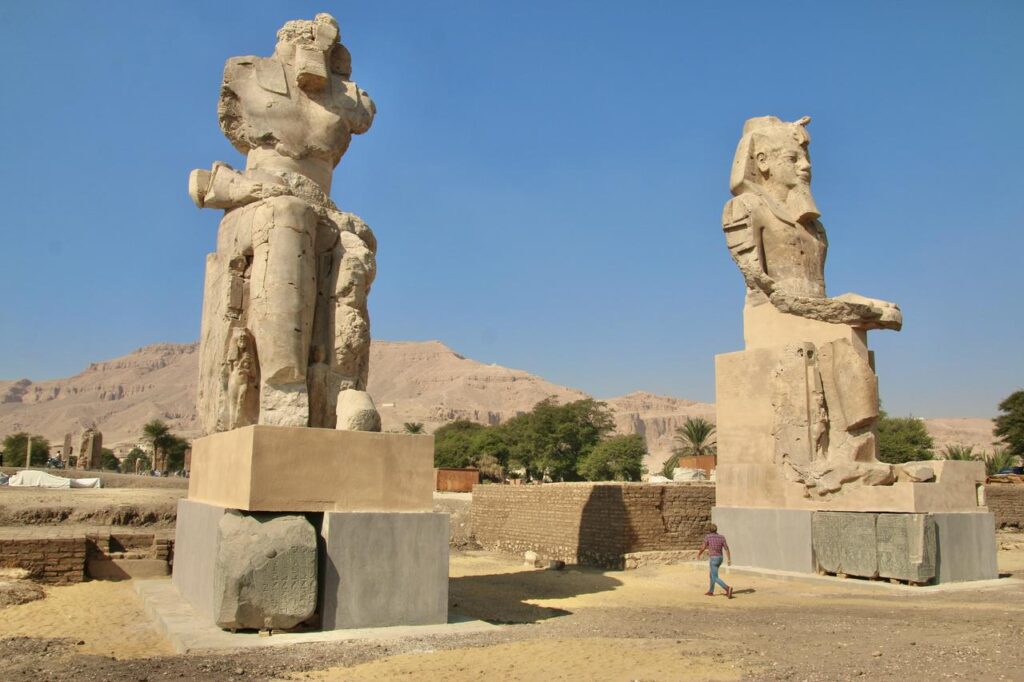
One of the most remarkable recent archaeological discoveries in Egypt was the uncovering of royal treasures associated with Pharaoh Amenhotep III in the Luxor region. This discovery attracted worldwide attention because Amenhotep III is widely regarded as one of the most successful and influential rulers of Ancient Egypt. His reign during the Eighteenth Dynasty marked a period of extraordinary prosperity, diplomatic achievement, artistic innovation, and monumental construction. The excavation, conducted near important archaeological zones in Luxor, revealed a collection of royal artifacts believed to be connected to the pharaoh and his court. Among the discoveries were golden statues, ceremonial objects, fragments of royal furniture, and decorative items that demonstrated the immense wealth of the Egyptian royal family during the New Kingdom. Archaeologists were particularly excited by the quality of craftsmanship displayed in these artifacts. Detailed carvings, precious metals, and religious symbolism reflected the advanced artistic skills that flourished during Amenhotep III’s reign. Many objects featured representations of Egyptian gods and symbols associated with kingship, divine protection, and the afterlife. The discovery also provided new evidence regarding the political and religious environment of the period. Amenhotep III ruled at a time when Egypt enjoyed strong international relations with neighboring kingdoms, including Mitanni, Babylon, and the Hittites. The luxury items uncovered suggest a royal court that benefited from both domestic wealth and international trade. For historians, these treasures offer a valuable opportunity to study one of Ancient Egypt’s most prosperous eras. The artifacts reveal details about royal ceremonies, artistic traditions, and the daily life of Egypt’s elite. As one of the most important archaeological discoveries in Luxor in recent years, the find contributes significantly to our understanding of New Kingdom Egypt and the legacy of one of its greatest pharaohs.
7. The Golden Masks and Royal Jewelry of Amenhotep III
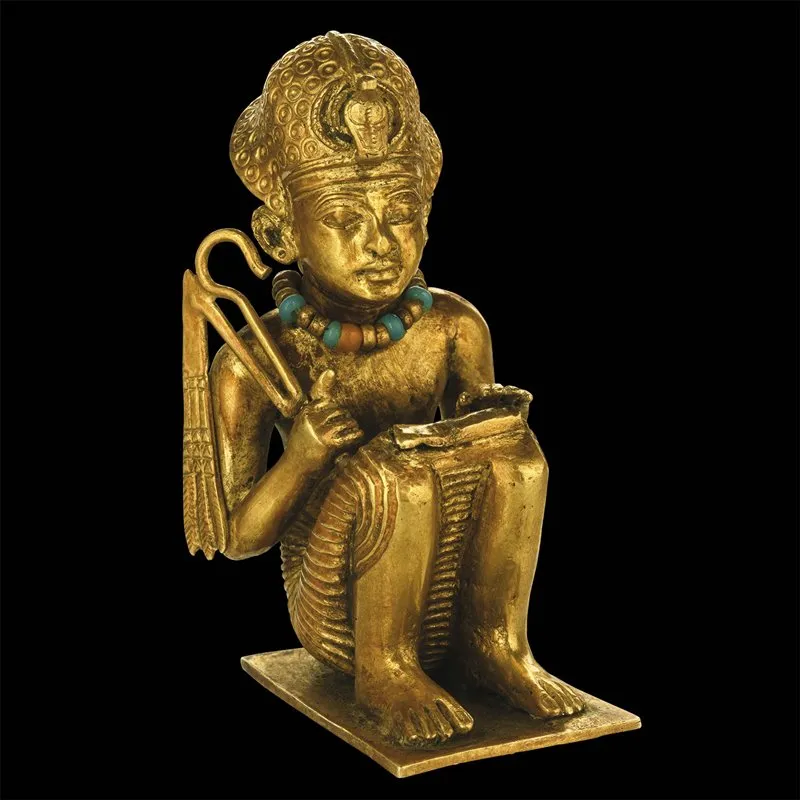
Among the most spectacular finds associated with the Luxor discovery were a collection of golden masks, jewelry, and ceremonial ornaments linked to the reign of Amenhotep III. These extraordinary artifacts highlight the wealth, artistic sophistication, and religious symbolism that characterized Ancient Egypt during the New Kingdom. The golden masks discovered by archaeologists were decorated with intricate designs featuring sacred imagery and royal iconography. Gold held special significance in Ancient Egyptian culture because it was considered the flesh of the gods and symbolized eternity, divine power, and immortality. As a result, royal burial equipment often incorporated large quantities of gold to ensure the protection and transformation of the deceased in the afterlife. In addition to the masks, excavators uncovered necklaces, rings, bracelets, pendants, and ceremonial ornaments crafted from gold and precious stones. These items displayed exceptional craftsmanship and revealed the high level of skill possessed by Egyptian goldsmiths. Delicate engravings, colorful inlays, and symbolic motifs demonstrated a remarkable attention to detail. Many of the jewelry pieces featured representations of important deities, including Amun, Ra, Hathor, and Horus. Such symbols were believed to provide spiritual protection and strengthen the connection between the pharaoh and the divine realm. Some artifacts also included royal cartouches that helped identify their association with Amenhotep III and members of the royal family. The discovery provides important information about fashion, religious beliefs, and artistic trends during one of Egypt’s most prosperous periods. It also illustrates the enormous resources available to the royal court and the sophisticated craftsmanship that flourished under royal patronage. These golden treasures rank among the most impressive recent archaeological discoveries in Egypt. Their beauty, symbolism, and historical significance continue to provide valuable insights into the culture, religion, and royal traditions of Ancient Egyptian civilization.
8. The Importance of Amenhotep III’s Reign in Ancient Egyptian History
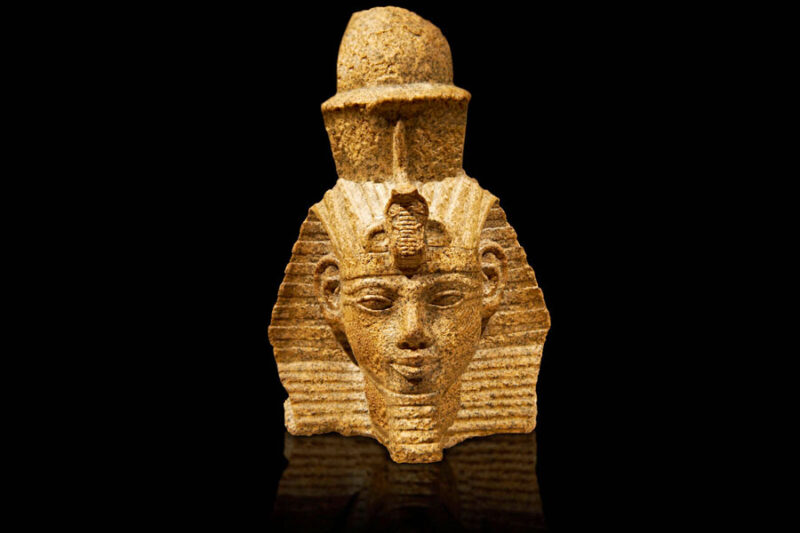
To fully appreciate the significance of the recent discoveries in Luxor, it is important to understand the historical importance of Amenhotep III’s reign. Often described as one of Egypt’s greatest pharaohs, Amenhotep III ruled during the Eighteenth Dynasty, approximately between 1390 and 1352 BCE, overseeing a period of peace, prosperity, and cultural achievement that became a high point of Ancient Egyptian civilization. Unlike many rulers who focused primarily on military conquest, Amenhotep III strengthened Egypt through diplomacy, trade, and monumental construction projects. International correspondence preserved in the Amarna Letters demonstrates that Egypt maintained close relationships with powerful foreign kingdoms across the Near East. These diplomatic connections brought wealth, luxury goods, and political stability to the kingdom. The pharaoh was also responsible for numerous architectural achievements. Massive temples, statues, palaces, and ceremonial complexes were constructed throughout Egypt during his reign. Among the most famous surviving monuments are the Colossi of Memnon, two enormous statues that continue to stand on the west bank of Luxor. Religion flourished during this period as well. Amenhotep III increasingly emphasized his divine status and strengthened the worship of solar deities, developments that would later influence the religious reforms introduced by his son, Akhenaten. Scholars often view his reign as a bridge between traditional Egyptian religion and the dramatic religious changes of the Amarna Period. The recent archaeological discoveries associated with Amenhotep III help historians better understand this transformative era. Artifacts, jewelry, statues, and ceremonial objects provide direct evidence of the wealth, power, and cultural sophistication that defined his rule. As a result, these findings are far more than collections of beautiful treasures. They offer valuable insight into one of the most influential periods in Ancient Egyptian history and help explain why Amenhotep III remains one of the most celebrated pharaohs of all time.
9. The Lost City of Aten Near Luxor
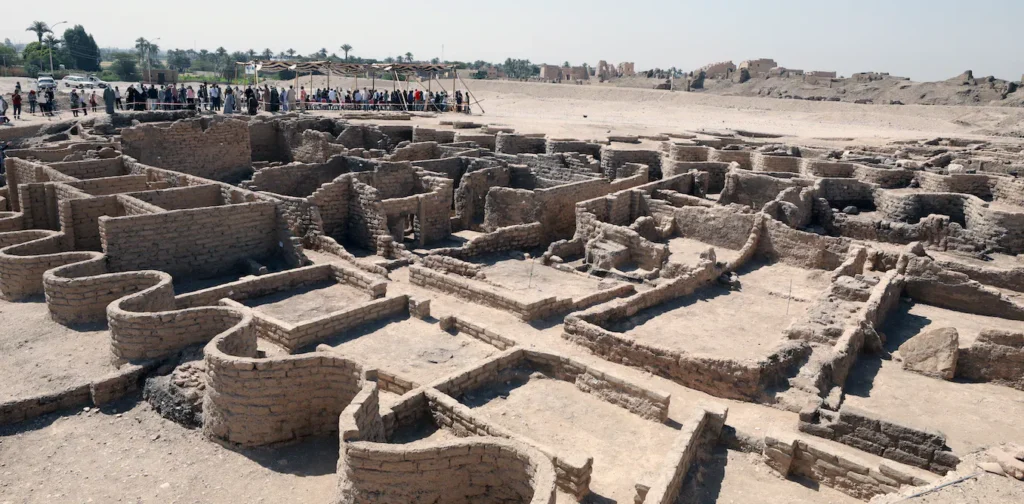
Among the most extraordinary archaeological discoveries in Egypt in recent years is the Lost City of Aten, often referred to as the "Golden Lost City." Unearthed near Luxor in 2020, this remarkable site has been described by many experts as one of the most important discoveries since the tomb of Tutankhamun. The city dates back more than 3,000 years and was founded during the reign of Pharaoh Amenhotep III, one of Ancient Egypt's most powerful rulers. The discovery attracted worldwide attention because of its exceptional state of preservation. Entire neighborhoods, streets, buildings, and workshops remained largely intact beneath the desert sands, allowing archaeologists to study an ancient Egyptian city in unprecedented detail. Unlike tombs and temples, which are commonly discovered in Egypt, complete urban settlements are comparatively rare. Excavations revealed residential districts, administrative buildings, industrial workshops, food preparation areas, and storage facilities. Archaeologists also uncovered tools, pottery, jewelry, scarabs, mud-brick walls, and everyday household objects that offer a unique glimpse into life during the New Kingdom. The city's name, Aten, derives from the sun god worshipped during the late Eighteenth Dynasty. Evidence suggests that the settlement served as a major administrative and industrial center connected to the royal court. It may have played a key role in supporting the vast building projects commissioned by Amenhotep III. The discovery is particularly valuable because it allows historians to move beyond royal monuments and examine the lives of ordinary people. Through the study of homes, workshops, and daily objects, researchers can better understand how ancient Egyptians worked, lived, and interacted with one another. Today, the Lost City of Aten stands as one of the most important recent archaeological discoveries in Egypt, offering an extraordinary opportunity to explore the social, economic, and cultural realities of Ancient Egyptian civilization.
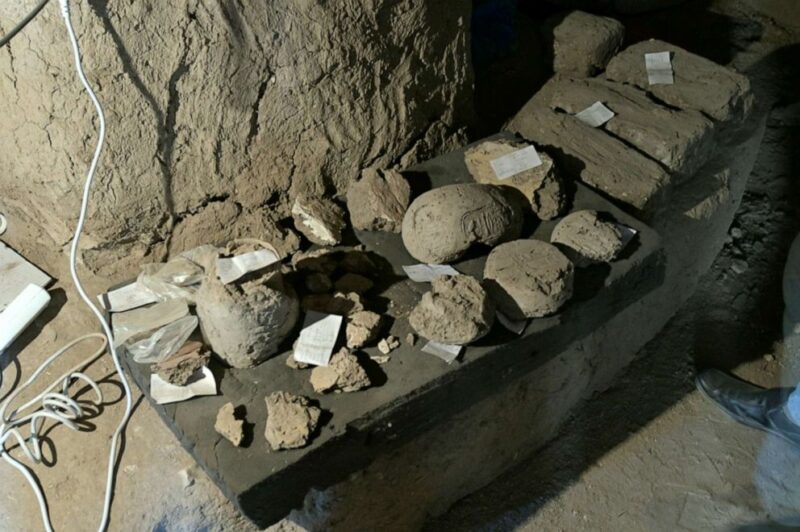
10. Daily Life Inside the Lost Golden City
One of the most fascinating aspects of the Lost City of Aten is the detailed insight it provides into everyday life in Ancient Egypt. While temples and royal tombs often focus on pharaohs and religious beliefs, this discovery offers a rare opportunity to examine the experiences of ordinary citizens who lived and worked during the New Kingdom. Archaeologists uncovered numerous residential buildings containing personal belongings, household tools, cooking equipment, and storage jars. These findings help researchers reconstruct how families organized their homes and managed their daily routines. Kitchens equipped with ovens and food preparation areas reveal the importance of bread production, one of the staples of the ancient Egyptian diet. The city also contained specialized workshops dedicated to various crafts and industries. Evidence of metalworking, jewelry production, textile manufacturing, and pottery making demonstrates the high level of skill possessed by Egyptian artisans. Many of these workshops appear to have supplied goods directly to the royal administration and temple complexes. Among the most significant discoveries were clay sealings bearing royal cartouches, suggesting that government officials closely supervised economic activities within the city. This provides valuable information about the administrative systems that supported Egypt's prosperity during the reign of Amenhotep III. Animal remains, tools, and agricultural equipment discovered throughout the site offer further evidence of daily economic activities. These artifacts help historians understand how food was produced, distributed, and consumed within an urban environment. The remarkable preservation of the Lost City of Aten makes it one of the most important sources of information about everyday life in Ancient Egypt. By studying the homes, workplaces, and possessions of its inhabitants, archaeologists can gain a more complete picture of society beyond the royal palaces and monumental temples that traditionally dominate Egyptian history.
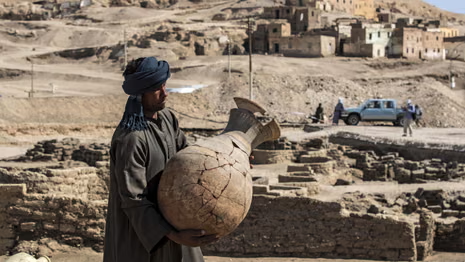
11. Why the Aten Discovery Changed Egyptology
The discovery of the Lost City of Aten is widely regarded as one of the most significant archaeological breakthroughs in modern Egyptology. Its importance extends far beyond the impressive structures uncovered at the site. The city has fundamentally changed how historians understand urban planning, economic organization, and daily life during one of the most prosperous periods of Ancient Egyptian history. Before the discovery of Aten, much of what scholars knew about the New Kingdom came from temples, tombs, inscriptions, and royal monuments. While these sources provided valuable information about religion and kingship, they offered only limited insights into the daily experiences of ordinary citizens. The Lost City filled this gap by revealing an entire urban environment preserved in remarkable condition. The city provides direct evidence of how labor was organized, how goods were produced, and how administrative systems operated. Archaeologists have been able to identify residential neighborhoods, industrial zones, storage facilities, and government-controlled workshops, creating a detailed picture of a functioning ancient city. The discovery has also contributed to a better understanding of the transition between the reign of Amenhotep III and that of his son Akhenaten. This period witnessed significant religious and political changes that eventually led to the establishment of the city of Amarna and the promotion of the worship of Aten as the supreme deity. In addition, the exceptional preservation of the site allows researchers to apply modern scientific techniques to analyze ancient materials, architecture, and environmental conditions. These studies continue to generate new information about life in New Kingdom Egypt. For many experts, the Lost City of Aten ranks among the greatest archaeological discoveries in Egypt in the twenty-first century. It has expanded our understanding of Ancient Egyptian society and provided a rare opportunity to study a thriving city that remained hidden beneath the sands for more than three thousand years.
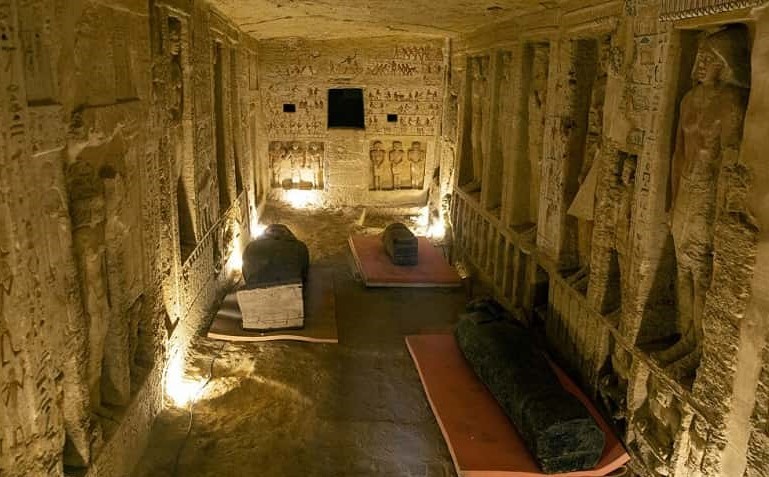
12. The Tomb of Wahtye at Saqqara
One of the most remarkable archaeological discoveries in Egypt in recent years is the tomb of Wahtye, an elite official who lived during the Fifth Dynasty of the Old Kingdom. Discovered in the Saqqara necropolis, the tomb dates back more than 4,400 years and is considered one of the best-preserved burial chambers ever uncovered from this period. Its exceptional condition has provided archaeologists with invaluable information about the lives of high-ranking officials during Egypt’s early dynastic history. Wahtye served as a priest and royal official under Pharaoh Neferirkare Kakai. His status within the royal administration is reflected in the size, decoration, and sophistication of his tomb. Carved directly into the bedrock, the burial complex contains multiple chambers adorned with colorful reliefs, hieroglyphic inscriptions, and detailed scenes from daily life. The discovery generated worldwide attention because many of the original colors remained visible despite thousands of years underground. Vibrant depictions of family members, servants, musicians, craftsmen, and religious ceremonies provide a rare glimpse into the social and cultural environment of the Old Kingdom. Archaeologists also uncovered numerous statues depicting Wahtye and his family, along with burial shafts that may contain additional artifacts and human remains. These findings continue to be studied in order to better understand burial practices and social hierarchy during this important period of Egyptian history. The Tomb of Wahtye stands as one of the most significant recent archaeological discoveries in Egypt because it combines exceptional preservation with a wealth of historical information. Its detailed artwork and inscriptions provide a valuable record of elite life, religious beliefs, and administrative structures during one of Ancient Egypt’s earliest golden ages.
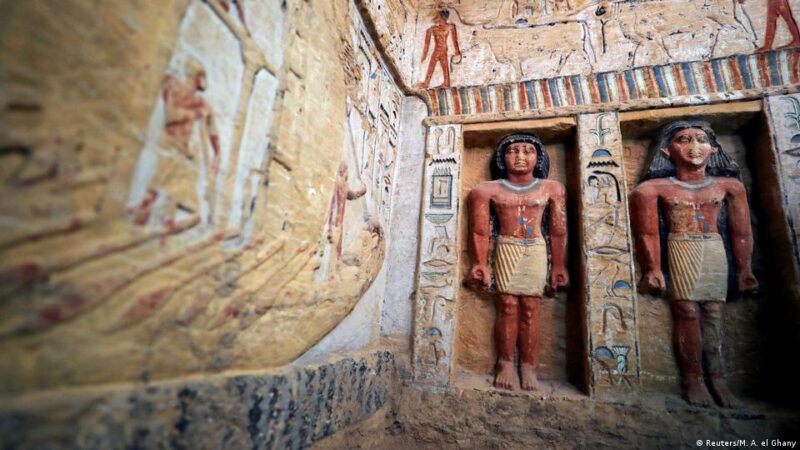
13. The Artistic Masterpieces Found in Wahtye’s Tomb
Beyond its historical significance, the Tomb of Wahtye is celebrated for its extraordinary artistic achievements. The walls of the burial chamber contain some of the finest examples of Old Kingdom art ever discovered, offering researchers an unparalleled opportunity to study the techniques, symbolism, and aesthetic traditions of Ancient Egyptian craftsmen. The relief carvings found throughout the tomb are exceptionally detailed and remarkably well-preserved. Artists carefully depicted scenes of hunting, fishing, agriculture, food preparation, religious ceremonies, and family gatherings. These scenes were not merely decorative; they were intended to ensure that the deceased would continue to enjoy prosperity and comfort in the afterlife. Particularly impressive are the representations of Wahtye himself. He is frequently shown overseeing workers, receiving offerings, and participating in sacred rituals, emphasizing his status and achievements during life. Family members are portrayed alongside him, reflecting the importance of family relationships in Ancient Egyptian culture. The vibrant colors preserved within the tomb demonstrate the sophistication of Ancient Egyptian pigments and painting techniques. Shades of red, blue, yellow, green, black, and white remain visible on many reliefs, allowing historians to better understand artistic practices that flourished more than four millennia ago. Hieroglyphic inscriptions accompanying the artwork provide additional context by identifying individuals, describing activities, and recording religious formulas. Together, the images and texts create a rich visual narrative of life during the Fifth Dynasty. For Egyptologists, the artistic treasures of Wahtye’s tomb are invaluable. They provide evidence of the creativity, technical skill, and cultural values that characterized Old Kingdom society. As a result, the tomb is regarded as one of the most important artistic discoveries in modern Egyptian archaeology.
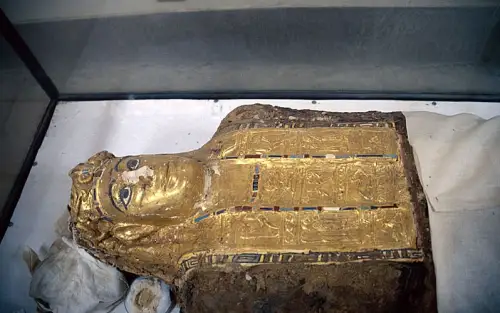
14. The Golden Mummies of the Bahariya Oasis
The discovery of the Golden Mummies in Egypt’s Bahariya Oasis ranks among the most fascinating archaeological finds of the modern era. Located deep within the Western Desert, Bahariya Oasis has emerged as one of Egypt’s most important archaeological regions, revealing evidence of extensive settlement and burial activity during the Greco-Roman and Ptolemaic periods. Excavations conducted in the area uncovered a large necropolis containing hundreds of mummies, many of which were adorned with gold-covered masks and elaborate funerary decorations. These extraordinary burials date primarily to the Ptolemaic and Roman periods, a time when Egyptian traditions blended with influences introduced following the conquest of Egypt by Alexander the Great. The golden coverings found on many of the mummies are particularly significant because they reflect beliefs about immortality and divine transformation. Gold was associated with the gods and was believed to possess eternal qualities. Covering the face of the deceased with gold was intended to ensure protection and facilitate their journey into the afterlife. In addition to the mummies themselves, archaeologists uncovered jewelry, pottery, coins, amulets, and funerary texts that provide valuable information about burial customs during this period. These artifacts demonstrate the wealth and cultural diversity that characterized Egypt under Greek and Roman influence. The Bahariya discoveries have also highlighted the importance of oasis communities in Egypt’s ancient economy and trade networks. Far from being isolated settlements, these communities participated actively in regional commerce and cultural exchange. Today, the Golden Mummies of Bahariya Oasis remain one of the most celebrated archaeological discoveries in Egypt. They offer a unique perspective on a period of cultural fusion and reveal how traditional Egyptian beliefs continued to thrive alongside foreign influences for centuries.
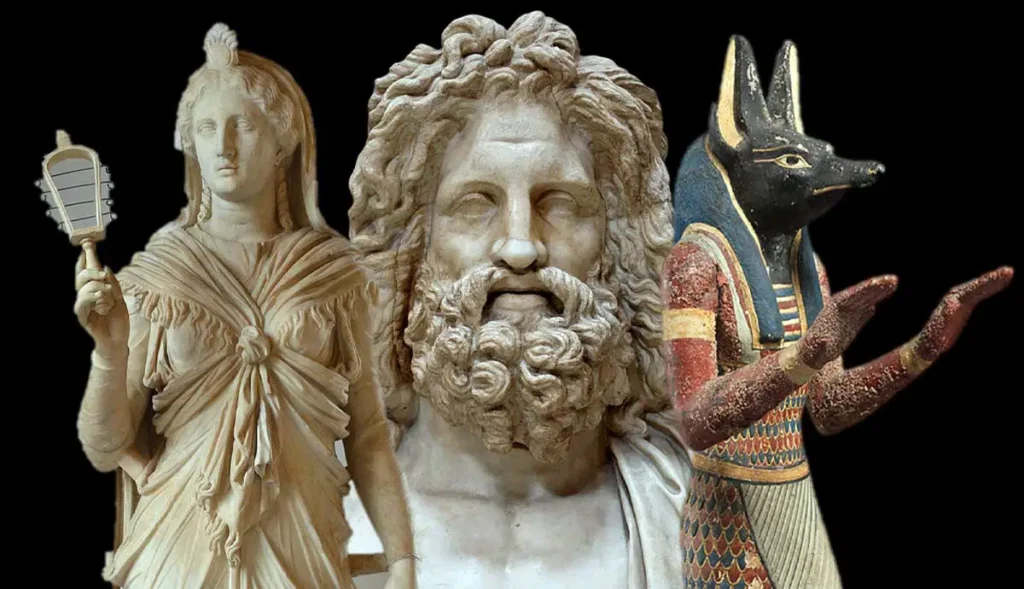
15. The Fusion of Egyptian and Greek Cultures in the Ptolemaic Period
One of the most fascinating aspects of the Golden Mummies discovery is the insight it provides into the cultural fusion that occurred during the Ptolemaic Period. Following the conquest of Egypt by Alexander the Great in 332 BCE, the country came under the rule of the Ptolemaic Dynasty, a Greek royal family that governed Egypt for nearly three centuries. This era witnessed an extraordinary blending of Egyptian traditions and Greek influences, creating a unique cultural landscape unlike any other in the ancient world. The Golden Mummies discovered in the Bahariya Oasis clearly demonstrate this cultural interaction. While the deceased were buried according to traditional Egyptian religious customs, many aspects of the burial equipment display Greek artistic influences. Portraits, facial features, decorative motifs, and certain funerary objects reveal a combination of artistic styles from both civilizations. Religious beliefs also evolved during this period. Egyptian gods continued to be worshipped throughout the country, but new deities emerged that combined Greek and Egyptian characteristics. One of the most famous examples was Serapis, a god created to appeal to both Greek and Egyptian populations. Temples dedicated to traditional Egyptian gods remained active while new forms of worship gained popularity. The Ptolemaic rulers themselves adopted many Egyptian customs in order to strengthen their legitimacy. They portrayed themselves as pharaohs, participated in traditional religious ceremonies, and commissioned temples built according to ancient Egyptian architectural principles. The Golden Mummies provide direct evidence of how these two cultures coexisted and influenced one another. Their elaborate burial practices reflect a society that embraced both its Egyptian heritage and its Greek connections. This cultural fusion contributed significantly to Egypt’s rich historical legacy and remains one of the most fascinating chapters in the history of the ancient Mediterranean world.
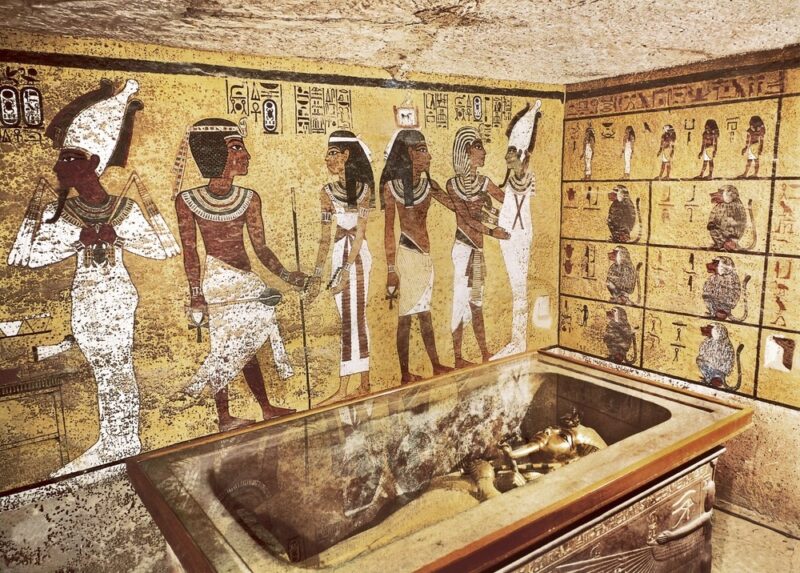
16. The Search for Nefertiti’s Hidden Chamber
Few mysteries in Egyptology have generated as much excitement as the search for the tomb of Queen Nefertiti. Renowned for her beauty, political influence, and association with the religious reforms of the Amarna Period, Nefertiti remains one of the most famous figures in Ancient Egyptian history. Yet despite decades of research, her final resting place has never been conclusively identified. Interest in the possibility of a hidden chamber intensified when researchers proposed that undiscovered rooms might exist behind the walls of Tutankhamun’s tomb in the Valley of the Kings. Advanced radar scans and non-invasive technologies suggested anomalies that could indicate the presence of previously unknown chambers concealed within the rock. The theory gained widespread attention because some experts speculated that one of these hidden spaces could contain the burial of Nefertiti herself. If proven correct, such a discovery would rank among the greatest archaeological breakthroughs since the discovery of Tutankhamun’s tomb in 1922. Archaeologists have approached the investigation with caution, carefully analyzing radar data, geological formations, and architectural features. While evidence remains inconclusive, ongoing research continues to fuel interest among historians and the public alike. The significance of locating Nefertiti’s tomb extends beyond the discovery of a royal burial. Such a find could provide valuable information about the Amarna Period, a transformative era marked by religious change, political upheaval, and artistic innovation. It could also help answer longstanding questions about Nefertiti’s role in government, her relationship with Akhenaten, and her influence on Egyptian history. Although the mystery remains unsolved, the search for Nefertiti’s hidden chamber continues to capture global attention and demonstrates that many secrets of Ancient Egypt may still lie hidden beneath the sands of the Valley of the Kings.
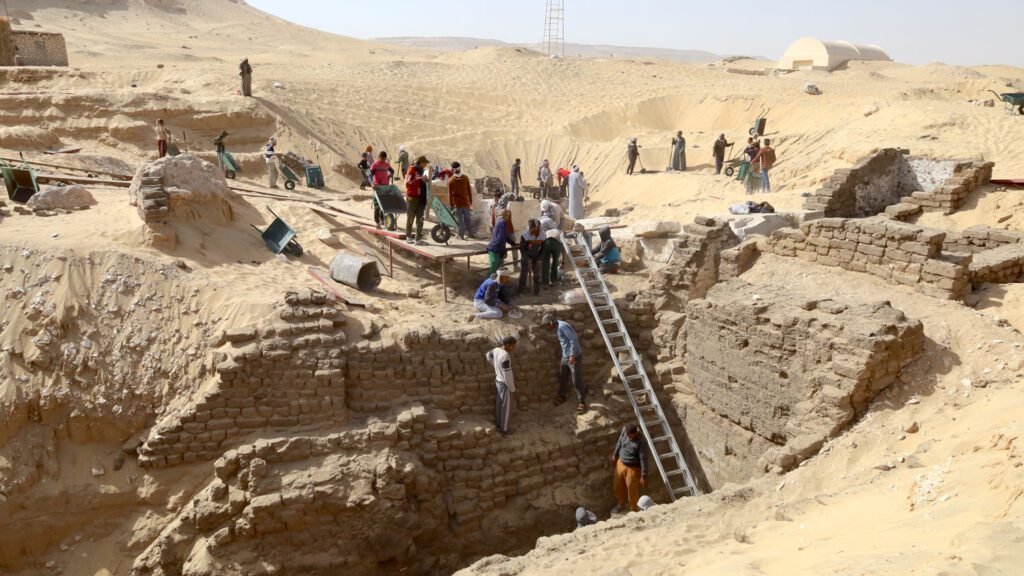
17. Future Archaeological Discoveries and the Continuing Exploration of Ancient Egypt
Despite more than two centuries of archaeological investigation, Egypt continues to surprise researchers with extraordinary discoveries. Every year, new tombs, temples, settlements, statues, mummies, and artifacts emerge from beneath the desert sands, proving that much of Ancient Egypt remains unexplored. For archaeologists, the country represents one of the greatest ongoing research opportunities in the world. Modern technology is playing a crucial role in this new era of discovery. Ground-penetrating radar, satellite imagery, 3D scanning, artificial intelligence, and advanced digital mapping techniques allow researchers to identify hidden structures without damaging archaeological sites. These innovations have significantly increased the chances of locating undiscovered tombs, lost cities, and buried monuments. Several regions continue to attract particular attention. Saqqara remains one of the most productive archaeological sites in Egypt, while Luxor and the Valley of the Kings continue to reveal important royal and religious discoveries. The Nile Delta, long difficult to excavate because of agricultural activity and rising groundwater, may also contain significant archaeological treasures waiting to be uncovered. Future discoveries could dramatically reshape our understanding of Egyptian history. New evidence may reveal unknown rulers, clarify historical timelines, uncover missing royal burials, or provide additional information about daily life among ordinary Egyptians. Every excavation contributes new pieces to the complex puzzle of Ancient Egyptian civilization. The continuing success of archaeological missions demonstrates that Egypt still holds countless secrets. As researchers explore new sites and revisit previously excavated areas using modern methods, the potential for groundbreaking discoveries remains enormous. For historians, archaeologists, and travelers alike, the future of Egyptian archaeology is incredibly exciting. The discoveries of today are only the beginning of a journey that will continue to reveal new insights into one of humanity’s greatest civilizations for generations to come.
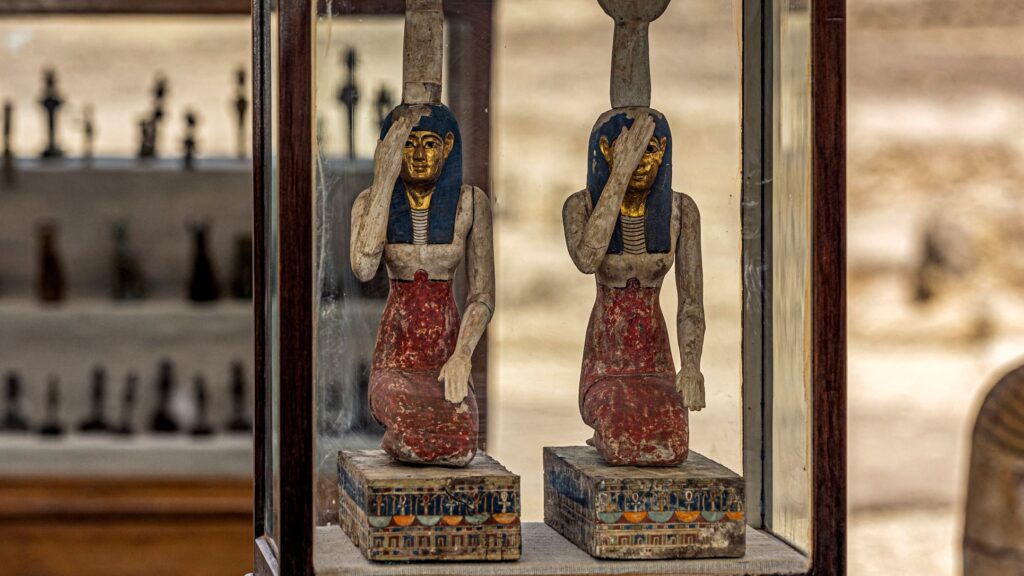
18. Why Recent Archaeological Discoveries in Egypt Matter
Recent archaeological discoveries in Egypt have provided some of the most exciting breakthroughs in modern historical research. From the newly discovered tombs at Saqqara and the treasures associated with Amenhotep III to the Lost City of Aten, the Golden Mummies of Bahariya Oasis, and the ongoing search for Nefertiti’s tomb, each discovery has expanded our understanding of Ancient Egyptian civilization in meaningful ways. These discoveries reveal far more than spectacular artifacts. They offer valuable insights into religion, politics, administration, art, architecture, trade, burial customs, and daily life. Through careful excavation and scientific analysis, archaeologists are uncovering stories that remained hidden for thousands of years beneath Egypt’s deserts and ancient cities. The discoveries also highlight the remarkable sophistication of Ancient Egyptian society. Whether examining the vibrant wall paintings of Saqqara, the luxury items of the New Kingdom, the urban planning of the Lost City of Aten, or the multicultural influences visible in the Golden Mummies, researchers continue to uncover evidence of a civilization that was highly organized, innovative, and deeply connected to its spiritual beliefs. Perhaps most importantly, these archaeological discoveries remind us that Egypt still holds countless secrets. New technologies and ongoing excavations continue to reveal previously unknown chapters of history, ensuring that the study of Ancient Egypt remains a dynamic and evolving field. For travelers visiting Egypt, these discoveries add even greater significance to famous destinations such as Luxor, Saqqara, the Valley of the Kings, and Bahariya Oasis. For historians and archaeology enthusiasts, they provide invaluable opportunities to deepen our understanding of one of the world’s greatest civilizations. As future excavations continue across Egypt, there is little doubt that new discoveries will emerge, bringing us even closer to understanding the extraordinary legacy of the pharaohs and the people who built one of history’s most enduring civilizations.
FAQs About Recent Archaeological Discoveries in Egypt
Some of the most important recent archaeological discoveries in Egypt include the new tombs discovered at Saqqara, the treasures associated with Pharaoh Amenhotep III in Luxor, the Lost City of Aten, the Tomb of Wahtye, the Golden Mummies of Bahariya Oasis, and the ongoing search for Queen Nefertiti’s tomb.
Saqqara served as the necropolis of the ancient capital Memphis for thousands of years. It contains pyramids, tombs, burial shafts, temples, and countless artifacts from multiple periods of Egyptian history, making it one of the richest archaeological sites in Egypt.
Archaeologists uncovered several well-preserved tombs dating to the Fifth Dynasty of the Old Kingdom. The discoveries included decorated wooden coffins, statues, colorful wall paintings, funerary objects, and hieroglyphic inscriptions that provide valuable information about ancient Egyptian society and religion.
The Lost City of Aten is one of the largest ancient settlements ever discovered in Egypt. It offers rare insights into daily life, urban planning, industry, administration, and society during the reign of Amenhotep III, one of Ancient Egypt’s most powerful pharaohs.
Amenhotep III was one of the greatest pharaohs of the Eighteenth Dynasty. He ruled during a period of peace, prosperity, and artistic achievement and is known for major building projects, diplomatic relations, and the construction of monumental temples and statues throughout Egypt.
The Golden Mummies are a collection of mummies discovered in Egypt’s Western Desert. Many were buried with gold-covered masks and elaborate funerary decorations, reflecting the wealth and cultural blending of Egyptian and Greek traditions during the Ptolemaic and Roman periods.
Wahtye was a high-ranking priest and royal official who lived during the Fifth Dynasty of the Old Kingdom. His remarkably preserved tomb at Saqqara contains detailed artwork, inscriptions, statues, and scenes that provide valuable information about life in Ancient Egypt more than 4,000 years ago.
No, Queen Nefertiti’s tomb has not yet been definitively identified. However, ongoing investigations and radar studies in the Valley of the Kings continue to explore the possibility of hidden chambers that could be connected to her burial.
Archaeologists use advanced technologies such as ground-penetrating radar, satellite imagery, 3D scanning, drones, digital mapping, and traditional excavation methods to locate and study ancient sites while preserving them for future generations.
Recent archaeological discoveries help historians better understand Ancient Egyptian civilization, including its religion, culture, government, economy, art, and daily life. These discoveries also attract millions of visitors to Egypt and contribute to preserving one of humanity’s most important historical legacies.